pühapäev, 29. juuli 2012

Angora 2, lõppude lõpuks/Angora 2, finally

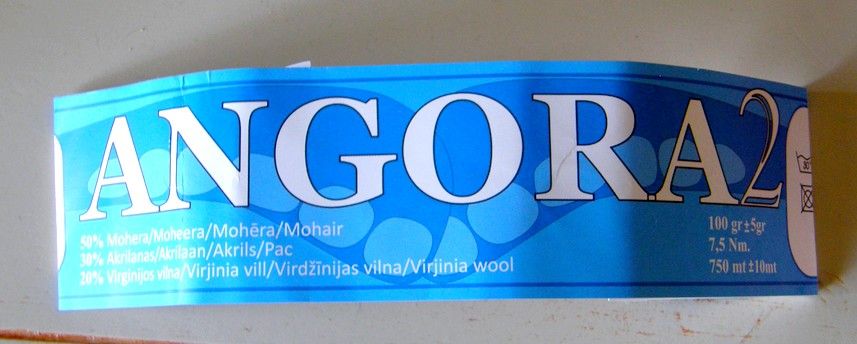
Leedus on üks lõngavabrik Midara. Selle toodetud peenike lõng Micro on tuttav neile, kes koovad haapsalu salle jms. Ise olen kudunud Roma-nimelisest villasest lõngast, sellest sai eelmisel suvel valmis hõlmik. Peale nende jäi mulle silma Angora 2. Angora 1 pole olemas ja koostises pole angoorat. Kuid see pole oluline. Koostis on 50 % mohäär, 30 % akrüül ja 20 % vill, metraaž 100 g/750 m ja, mis peamine, on palju värve. Võib küll kurta Midara toodangu üle jms, kuid mõned firmad võiksid värvikaartidest malli võtta. Sellest Angora 2-st olen rääkinud Leedus olles üsna palju. Ravelrys on sellest kootud, võib sisestada Midara, valida sealt Angora 2 ja vaadata. Nüüd otsustasin järele proovida. Lõng meenutab mohääri, kuid puudub karvasus. Vardaga nr 4 tuleb kena pitsiline kude.
In Lithuania there is a yarn factory called Midara. One of its products, a lace weight yarn Micro is familiar to those who knit Haapsalu scarves. I have used Roma fine wool and made a wrap jacket last summer. In addition to those my attention was caught by Angora 2. Angora 1 does not exist and the yarn does not contain any angora fibers. But this is irrelevant. The fiber content is as follows: 50 % mohair, 30 % acrylic and 20 % wool, 100 g/750 m and, what is important, it is available in many colours. One can criticize Midara products and so on but some companies could learn from their colour cards. While in Lithuania, I have been talking quite a lot about Angora 2. There are porjects on Ravelry, just type Midara and choose Angora 2 from the list. Now I decided to finally try it. The yarn reminds of mohair but lacks is hairyness. With 4 mm needles you get a nice lace fabric.
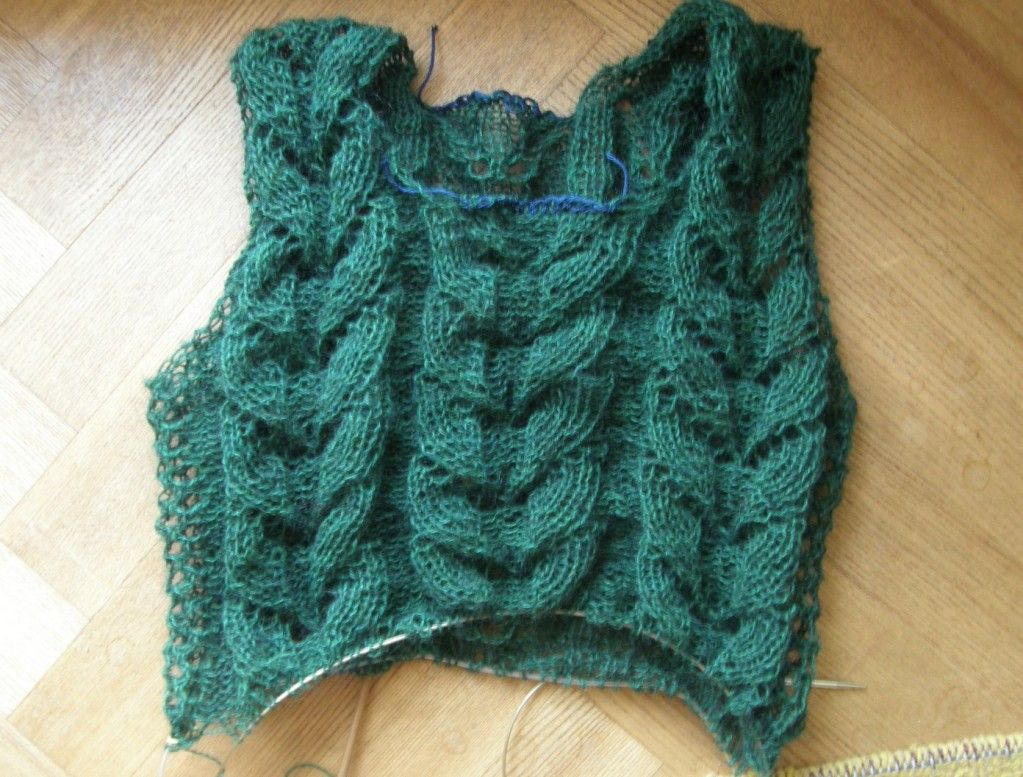
Olen ilmselt pitsiliste sviitrite lainel. Elie alustasin ühe mustriga, mis oli mul ammu meeles. Tuli välja, et muster sobib suurepäraselt, kudum edeneb. Plaanis on suur krae.
Probably I am in the lace sweaters mood. Yesterday I started with a lace pattern that I had had on my mind long ago. It appears that the pattern fits perfectly with the yarn and the knit is progressing. I am thinking about a large collar.
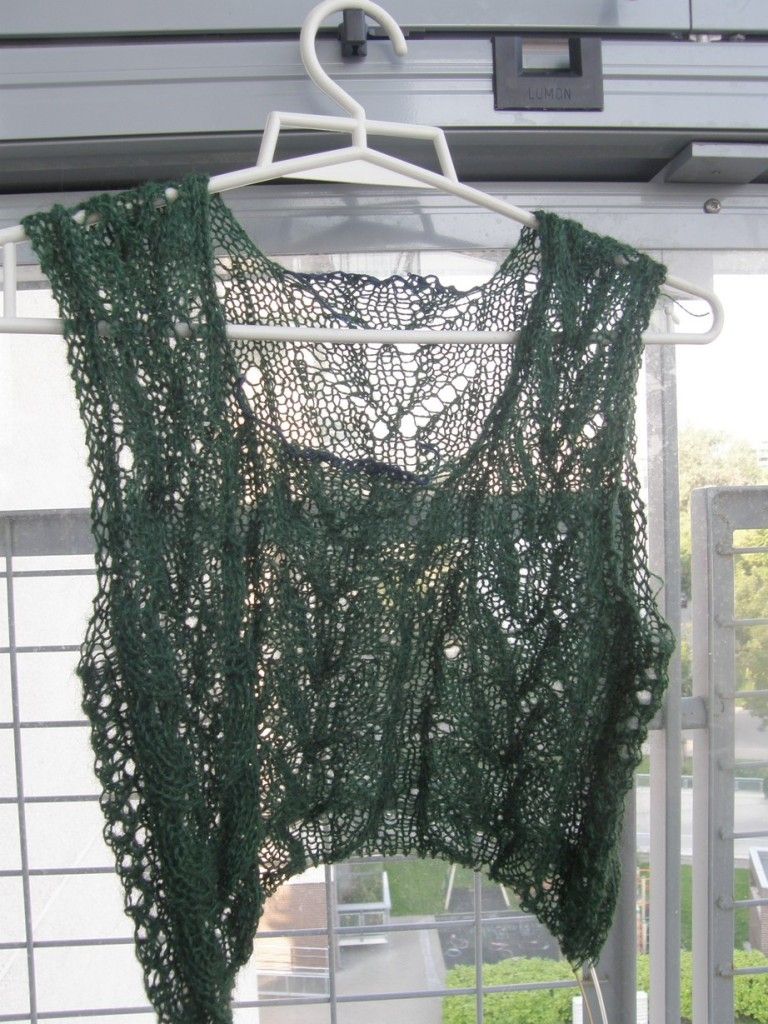
Tegelik värv on pisut tumedam, kui viimasel pildil.
The real colour is somewhat darker than in the last picture.

reede, 27. juuli 2012

Radikaalne punane/Radical red

Valmis! Avele suur tänu pildistamast. Vilniuses on ligi 30 kraadi, päike on igal pool. Õnneks on igasugu hoove, kus on sobiv valgus ja taust.
Finished! Many thanks to Ave for taking pictures. It is about 30 degrees Celsius in Vilnius and the sun is shining everywhere. Luckily, there are courtyards where the light and the background are suitable.
Lõng/Yarn: Fabel (Drops), 50 g/205 m (75 % vill/wool, 25 % polüamiid/polyamid), ~ 175 g
Vardad/Needles: 3,5 mm
Pildid/Pictures: Ave

neljapäev, 26. juuli 2012

Peaaegu/Almost there


Pole eriti aega kirjutada, püüan vabal ajal kududa. Palavus on siin 30 kraadi, mis on liig. Ka õhtul kl 5-6 paiku on küllalt palav. Varrukad on juba valmis, arvan, et selline pikkus on paras. Ma ei teinud eriti palju kahandusi: pärast ühendamist 3-s mustrikorras (kõrguses) 1 kord 2 silmust (-6 silmust), pärast kudusin 6 mustrikorda kahandusteta, siis kahandasin veel üks kord 2 silmust ja lõpuks ripskoelises ääres korraga 4 silmust. Kahanduste rütmi saab reguleerida, kogu aeg selga proovides. Nüüd oleks vaja veel 3-4 mustrikorda alla kududa ja kudum on valmis. Loodan näidata varsti juba valmiskudumit. Ave, tänan pildistamast!
I have little time to write and try to knit in my free time. The heat is here around 30 degrees Celsius, which is too much. In the evening around 5-6 p.m. it is quite hot. The sleeves are ready and I believe this length is right. I did not make many decreases: after joining I decreased in 3 repeats (in the hihgt) 1 time 2 stitches (-6 stitches), then I knitted 6 repeats without decreases, then decreased 2 stitches ones more and, finally, decreased 4 stitches at once in the garter edging. The rythm of decreases can be ajusted by trying on every now and then and looking what is right for you. Now I need 3-4 repats more and the sweter will be finished. I hope to show you the finished sweater next time. Ave, thanks for the picture!

esmaspäev, 23. juuli 2012

Kooskudumine jätkub/KAL in progress

Kooskudumine jätkub. Alustasin varrukat. Võib-olla mäletate, et kunagi varem kirjutasin päris pika postituse varruka ülevalt alal kudumisest ja pitsilise mustri sobitamisest. See on siin, põhimõte on sama. Alustasin 14-st silmusest, otsustasin, et varruka keskele tuleb 1 mustrikord ja ülejäänud silmused on pahempidised. Siis pole kudum ülekoormatud ja varruka kahandused ei lõhuks mustrit.
KAL is in progress. I started one sleeve. Maybe you remember that some time ago I wrote a lengthy post about knitting sleeves top down and adjusting lace patterns. Here it is, the principle is the same. I started from 14 stitches and decided that there will be 1 pattern repeat in the middle of the sleeve and the rest will be reversed stockinette. In this way the garment will not be too overloaded with lace patterns and sleeve decreases will not interfere with the pattern.
Samuti soovitan viimistleda kaelus enne, kui otsustate lõpliku pikkuse üle. Kaelus ja varrukad panevad kudumi paika.
I also recommend finishing the neck opening before you decide about the final length of the garment. The neck opening and the sleeves fix the garment.

laupäev, 21. juuli 2012

Kooskudumine/Knitting along

Nüüd on suur uudis: juhin Mustrimaailma foorumis kooskudumist! Lõng on Drops Fabel (50 g/205 m), sobiks ka mõni muu sokilõng, Raasiku 8/2, ka Drops Alpaca ja palju muud. Ma ei hakka eesti keeles juttu dubleerima, keda huvitab konstruktsioon, võib lugeda foorumis seda teemat (on vaja registreeruda). Esimene foto näitab mustrit. Minu tugirühmas on Ave ja Helin. Helin koob Dropsi alpakast ja tal on teine muster. Ave mõtleb veel lõnga ja mustri üle.
I have some news: I am leading a KAL at the Estonian forum Mustrimaailm! It is all in Estonian and I am going to provide here explanations in English for those who are interested (Estonian-speakers can follow the link). My yarn is Drops Fabel (50 g/205 m), any sock yarn will do, also Raasiku 8/2, Drops Alpaca and many others. The top picture shows the pattern. If you want charts, just let me know. My support group includes Ave and Helin. Helin is working with Drops Alpaca and has a different stitch pattern. Ave is choosing a yarn and a pattern.
Alustame abilõngast. See pole kohustuslik, maitse asi. Mulle meeldib pärast kasutada n-ö lahtiseid silmuseid kaeluse viimistlemiseks. See on seljatükk, algab mõttelisest õlajoonest pisut allpool.
We start with a provisional cast-on. It is not compulsory, just a matter of taste. I like to use live stitches for the finishing of the neck opening. This is the back piece, started slightly below the imaginary shoulder line.
Siin on vasak esitükk. Jätsin seljatüki ootele, koon esitükid, siis ühendan omavahel.
Here is the left front piece. The back piece is on hold, I am working on the front pieces and then join them.
Siin on juba mõlemad esitükid, aga veel ühendamata.
Here are both front pieces but not joined yet.
Nagu näha, tegin enne ühendamist natuke kasvatusi (lisasin kummalegi esitükile 2 silmust). Niimoodi tuleb ümaram kaelus.
As you see, I made some increases before joining the pieces (just increased 2 stitch at each front piece). In this way the neck opening will be more rounded.
Esitükid ühendatud, proovisin selga, kas võib nüüd ühe esi- ja seljatüki omakorda ühendada. Tegin esi- ja seljatüki äärtele mõned kasvatused, siis ühendasin: esitükk, luua 4 silmust kaenla alla, seljatükk, jälle 4 silmust, ühendasin, koon ringselt.
The front pieces are joined and I tried it on in order to know whether it is time to join the front and the back. I made some increases at the edges of the front and back piece and then joined them: knit the front piece, cast on 4 stitches for underarm, knit the back piece, cast on the second group of underarm stitches, join, work in the round. 
Seega on asi lihtne. Lõin 69 silmust. Esitükid on alguses kumbki 24 silmust, siis kasvatsin 1 silmuse juurde kaeluse jaoks, järgmises parempidises reas samuti (26 silmust). Ühendamiseks on vaja arvutada, mitu silmust luua. Selle arvu saame nii: seljatüki silmused - 2 x esitüki silmused. Seega 69 - 2 x 26 = 17. Pärast kudusin mõnda aega veel ja lisasin äärtele 1 silmuse: 69 + 2 = 71. Ühendades lõin 4 + 4 silmust, nagu juba öeldud. Silmuste arv on nüüd 71 + 4 + 71 + 4 = 150. Minu suurus on S, ei tundu liiga liibuv.
Thus, it is rather simple. I casted on 69 stitches. The front pieces were 24 stitches each, then I increased 1 stitch for the neck opening and one more time in the next right-side row (26 stitches). To join the front pieces, you have to calculate how many stitches you have to cast on. This figure is obtained in the following way: back piece stitches - 2 x front piece stitches. Thus, 69 - 2 x 26 = 17. After joining the front pieces I knitted some more and then added 1 stitch at each edge: 69 + 2 = 71. For joining the front and the back I casted on 4 + 4 stitches, as already stated. Stitch count is now 71 + 4 + 71 + 4 = 150. My size is S and the sweater is not too tight.
Kuldne reegel: proovige selga, vaadake iga natukese aja taga, kuidas on.
A golden rule: try on as you go, look how it fits every now and then.

neljapäev, 19. juuli 2012

Pisut tehniline/Somewhat technical

Seletan viimase kudumi konstruktsiooni. Mõni on terava silmaga ja tähele pannud, et taga on ka pitsimuster. Konventsionaalse ehk alt üles õmblustega kudumise puhul oleks nii: jätkata pitsiribad, pärast seljatüki külge ja omavahel kokku õmmelda. Samas saab hakkama ka õmblusteta ja lihtsamalt. Muidugi üks võimalus on selline, nagu olen teinud sallkraega jakkide puhul: kui kere osa on valmis, noppida üles esitükkide ja krae silmused ja kududa nööbiliistud ja krae. Ei ole paha, aga tahtsin teha nii, et kudumissuund vahelduks (ehk visuaalselt oleks sama pilt nagu ülalmainitud konventsionaalse kudumisviisi puhul). Nüüd vaatame pilti ja seletame.
I am going to explain the construction of the recent knit. Some shrewed knitters have noticed the lace pattern on the back of the neck. This would be as follows in conventional bottom up knitting with seams: continue lace columns, then seam them together and to the back piece. However, you can do it without seams and in a easier way. Of course there is an option to do as I usually do with shawl collar jackets: when the torso part is finished, you pick up stitches along the front pieces and in the back of the neck and then knit button bands and the collar. It is not bad at all but I wanted to change the direction of knitting in order to get the same visual effect as in the above mentioned conventional knitting. Let us look at the picture and comment.
Roheline joon on kudumise algus. Loome krae silmused (antud juhul pitsiriba), koome selja keskelt. Loomisäärelt korjame üles silmused ja koome samamoodi teises suunas. Kudumissuunda tähistavad mustad nooled. Kui kootud on niipalju, et krae laius on käes, loome õlasilmused (oranžid jooned) ja koome pitsiriba koos esitükkidega. Seljatüki jaoks korjame üles silmused mööda õlajoont: esialgu üks õlg (oranž joon), siis mööda krae äärt (sinine joon), siis teine õlg (teine oranž joon). Koome seljatüki. Edasi läheb tavaliselt, ühendame kaenla alt ja koome ringselt alla.
The green line is the beginning of knitting. Cast on the collar stitches (the lace column in this case) and start knitting from the middle of the back. Then pick up stitches of the cast on edge and do the same in the oposite direction. The black arrows show the direction of knitting. When you have knitted as much as the width of the collar, cast on shoulder stitches (orange lines) and continue the lace columns together with the front pieces. For the back piece pick up stitches along the shoulder line starting from one shoulder (orange line), then along the collar (blue line) and then along the other shoulder (the second orange line). Knit the back piece. Then it goes as usual: join the pieces under arms and continue in the round to the bottom.

teisipäev, 17. juuli 2012

Valmis/Finished

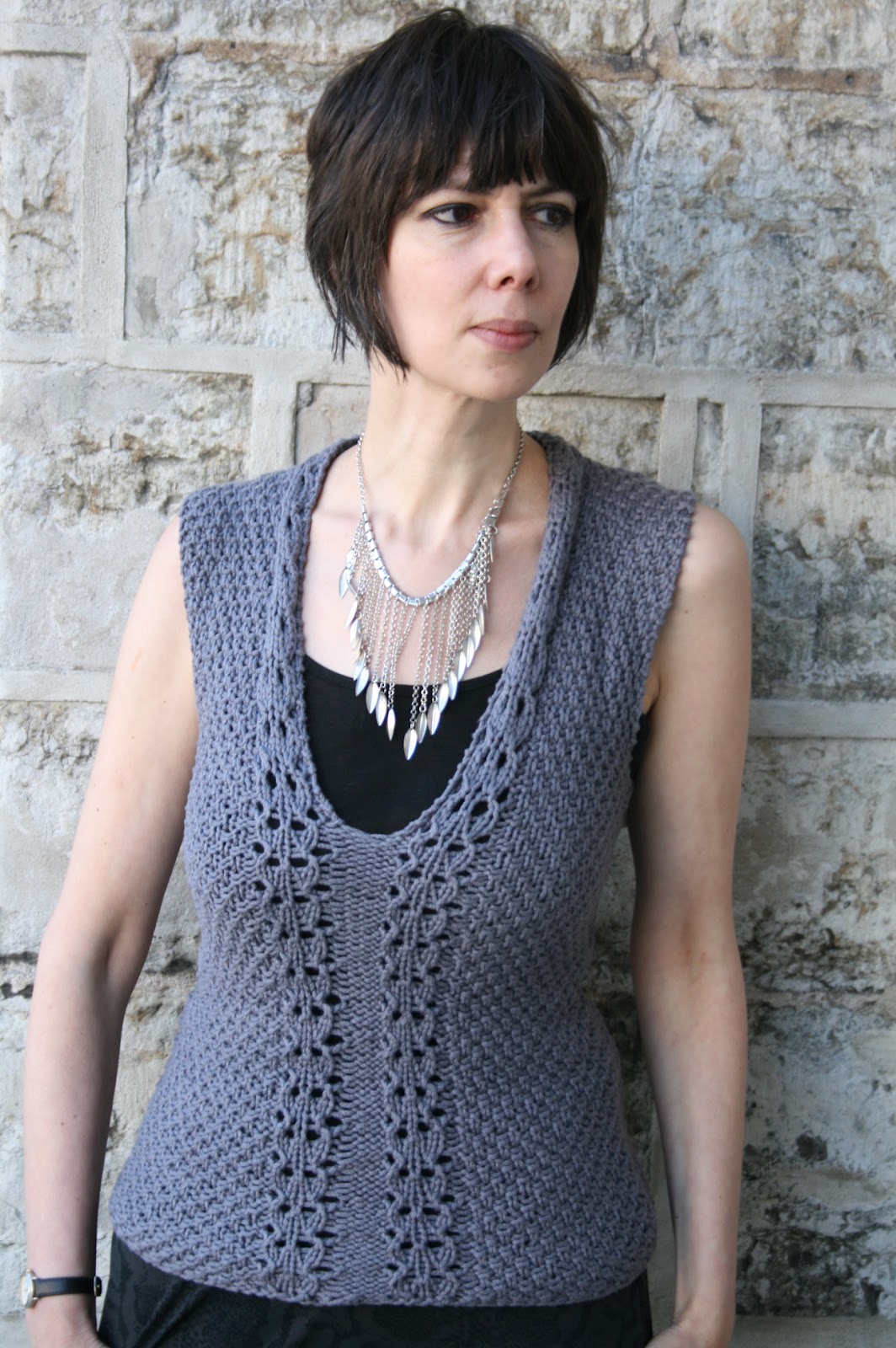
Nüüd näitan valmis topi pilte. Kristiina, tänan väga piltide eest! Eesti suvi on lühike, praegu on just aeg kanda. Pitsiribad on antud juhul minu improvisatsioon (ma ei julge öelda, et olen leiutanud uue mustri, parimal juhul taasleiutanud, mis on juba olemas). Kavatsen seda mustrit veelgi kasutada, mõnikord on vertikaalseid kitsaid pitsimustreid vaja.
Now I am going to show the pictures of the finished top. Kristiina, thank you very much for the photos! Estonian summer is short and now it is a high time to wear it. The lace pannels are my improvisation (I do not dare to claim that I have invented a new stitch pattern; in the best case I have re-invented something already existing). I am going to use this pattern because sometimes you need a narrow lace column.


Lõng/Yarn: Altamoda Estate (Lana Grossa), 50 g/80 m (80 % puuvill/cotton, 10 % siid/silk, 10 % nailon/nylon), 5 tokki/balls
Vardad/Needles: 5,5 mm
Pildid/Pictures: Kristiina
Ravelry